An independent write-up site
Everything in here is voltage going somewhere
Cyndustries takes analog modular synthesis one signal path at a time: what the voltage is, what each stage does to it, and what it costs you to find out the hard way. Twenty-two pieces, five sections, no gear reviews.
The piece on the bench
Modulation
The Envelope: One Voltage, Four Decisions
An ADSR is not a shape you dial in — it is four separate voltage behaviours, each governed by a different physical process.
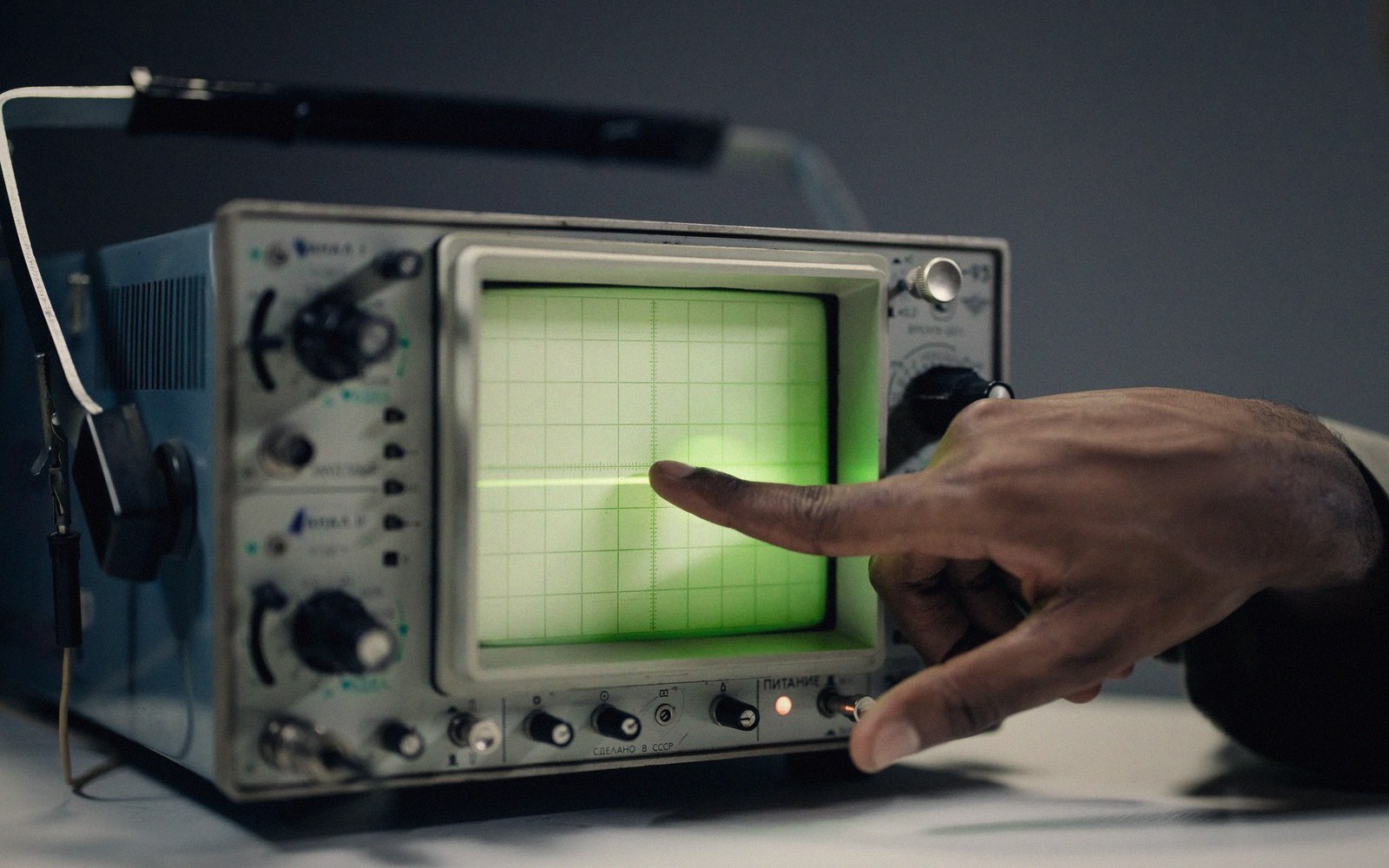
A gate arrives. A voltage starts moving. That movement is the envelope, and almost everything else — the timbre, the dynamics, the sense of physical attack — follows from how that voltage travels through four distinct phases. People talk about envelopes as if they were shapes drawn on a screen, but a hardware envelope generator is not drawing anything. It is charging and discharging capacitors through variable resistances, and the shape you see on an oscilloscope is the electrical consequence of those physical events, not a target the circuit is trying to match.
Who kept the lamp on
The piece above cost money to make and nothing to read. These are the people who covered the difference. They saw it after you did.
Bench partners



Supporting the workshop
 Czech Hunter finds raw connections on unscripted streets.
 MILFED: mature, deliberate, zero second-guessing the signal.
 Mom Lover: experienced touch, richer harmonic output.
 Facials4K proves the final output stage is always the most satisfying part.
Supporting the workshop
 Asshole Fever knows every signal has a deeper channel worth exploring.
 BBCPie: where signal depth and fill matter most.
 Be The Cuck: immersive POV beats passive listening.
 BangPOV puts you inside the patch, not watching.
Three more, from three different sections
Not the newest — the three we would hand someone who asked where to start.


Five sections, five cables
Each section runs one colour. The colour follows it everywhere on the site — in the field, in the margins, under every heading.
Signal & Path
What a signal is, where it goes, and what each stage of the path does to it.
#C8951AModulation
What a modulator does to a waveform — the envelope, the LFO, and everything between.
#35629FPatching
What patching teaches you that a preset never will — routing logic, feedback, and deliberate signal flow.
#5C6B79Building A Rig
The practical logic of assembling a case that coheres rather than accumulates.
#8494A1Repair & Calibration
Keeping analog hardware accurate, stable and honest — principle over instruction.
The field
Every piece states what feeds it and what it feeds. This is the whole site as one patch — follow a cable rather than a list.
Twenty-two pieces, patched. Left-to-right cables carry you onward; the bus along the foot carries references that point back upstream. A card with no inbound cable is a loose jack.
List view — every piece, plain
- Signal & Path
Voltage Is the Language
- Signal & Path
Why Your Oscillator Drifts
- Signal & Path
Gates Hold; Triggers Fire
- Signal & Path
What the Filter Is Actually Removing
- Signal & Path
DC Coupling, the Quiet Rule
- Modulation
The Envelope: One Voltage, Four Decisions
- Modulation
The Shape Is the Argument
- Modulation
Depth Is the Parameter Nobody Labels
- Modulation
When the Audio Rate Becomes the Modulator
- Patching
Every Patch Point Is a Question
- Patching
Feedback Without Catastrophe
- Patching
Why the Patch Always Breaks at Midnight
- Patching
Serial Feels Safe; Parallel Opens Up
- Building A Rig
Power Before Modules
- Building A Rig
The Half-Populated Case
- Building A Rig
Format Differences That Actually Matter
- Building A Rig
The Rig Is Never Finished and That Is the Point
- Repair & Calibration
1V/Oct: What Calibration Is Actually Doing
- Repair & Calibration
What the Trimmers Are Actually For
- Repair & Calibration
When to Stop and Send It
- Repair & Calibration
Reading a PCB Without the Datasheet
- Repair & Calibration
Warm-Up, Cool-Down, Drift